
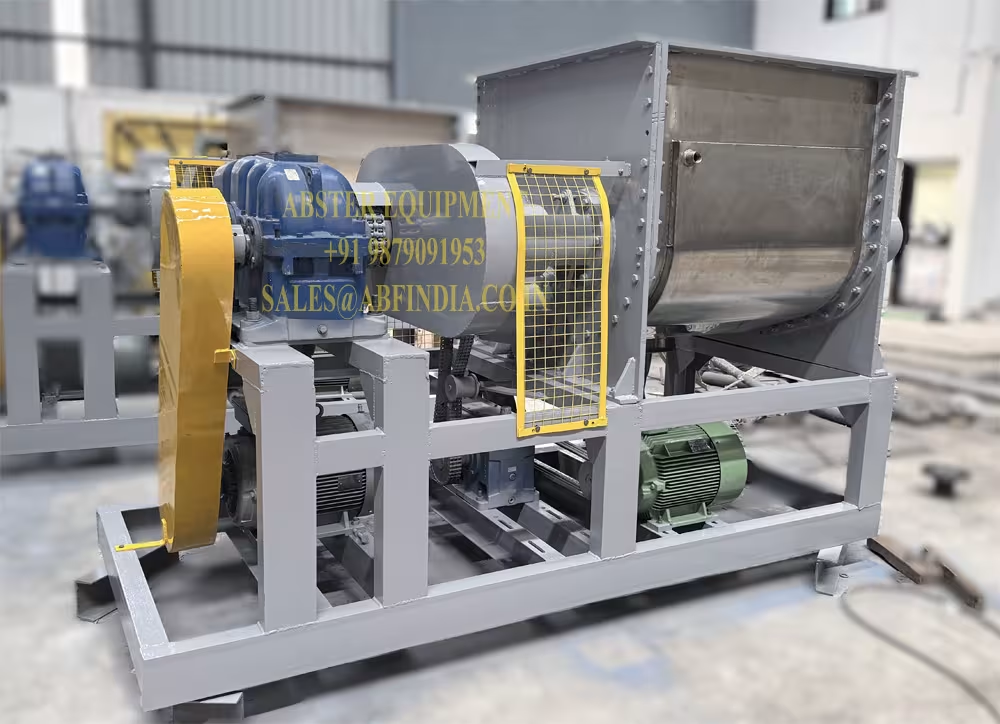
Z Blade Mixer
The Z-blade mixer is a specialized machine designed for the mixing and compounding of rubber compounds. Its distinctive feature is the dual blades shaped like the letter ‘Z’, which provide a high degree of mechanical and thermal energy to the mixing process. This unique design allows for efficient dispersion, blending, and mixing of the rubber compounds.
Details of Z Blade Mixer
low grinding fineness
Wide range of applications
high working efficiency
Application: Paint, Adhesive, Battery, Pharmaceutical industry, Cosmetic
Z-blade mixers
Z-blade mixers (sigma mixers) are ideal for mixing and kneading heavy, high-viscosity mastics. They feature dual Z-shaped blades rotating at different speeds in a U-shaped trough, generating intense shear, tearing, and folding actions necessary to evenly disperse fillers and resins.
Mixing Mechanism
The Z blade mixer employs a combination of mechanical shearing and kneading actions to achieve a thorough mixing. The blades rotate in opposite directions, creating a vigorous agitation and intensifying the mixing process. This mechanism ensures the dispersion of fillers, accelerators, and other additives, resulting in a homogenous rubber mixture.
Advantages of Z Blade Mixer
1. Enhanced Mixing Efficiency
The Z-blade mixer significantly reduces mixing time compared to traditional methods. The intensive mechanical action and strong shear forces generated by the blades enable rapid blending and dispersion of the rubber compounds. This efficiency not only saves time but also increases productivity.
2. Improved Homogeneity
Uniformity and consistency are critical in rubber production. The Z blade mixer’s unique design ensures that all components of the rubber compound are thoroughly mixed, resulting in a homogenous mixture. This consistency positively impacts the properties and performance of the final rubber product.
3. Enhanced Heat Transfer
The Z-blade mixer enhances heat transfer during the mixing process. The intense mechanical action generates frictional heat, effectively accelerating the vulcanization process. This feature reduces the curing time required for rubber compounds, resulting in improved productivity and cost-effectiveness.