
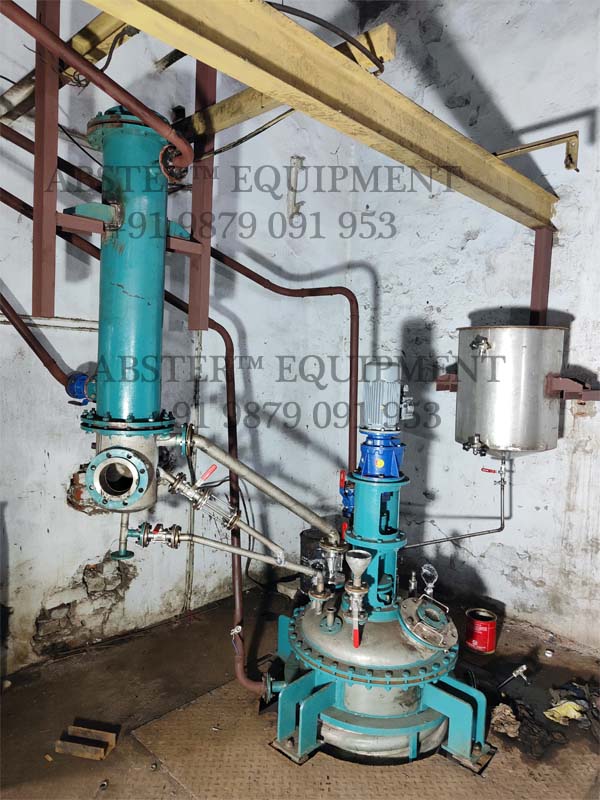
Acrylic Resin Plant
Quick Details
Heating:
Tower Reactor Type:
Acrylic Resin Plant
Acrylic resin Plant are a vital component in various industries, including the production of adhesives, coatings, paints, and more. Their versatility and reliability make them an essential tool for many manufacturing processes. In this guide, we will explore the applications and processes of acrylic resin reactors in detail, providing a comprehensive overview of their uses and benefits.
Introduction to Acrylic Resin Reactors
Acrylic resin reactors are vessels used to carry out chemical reactions involving the polymerization of acrylic resins. These reactors are designed to withstand high pressure and temperature, making them suitable for a wide range of applications. The primary function of acrylic resin reactors is to produce acrylic resins, which are widely used in the manufacturing of adhesives, coatings, and paints.
Acrylic resins are commonly used in the automotive, architectural, and industrial coatings industries due to their excellent weatherability, chemical resistance, and adhesion properties. The production of acrylic resins requires precision and control, which is where acrylic resin reactors play a crucial role. By providing a controlled environment for the polymerization process, these reactors ensure the quality and consistency of the final product.
Applications of Acrylic Resin Reactors
Acrylic resin Plant or say Acrylic resin reactor are used in various industries, each with its unique set of requirements and challenges. One of the primary applications of acrylic resin reactors is in the production of water-based acrylic adhesives. These adhesives are widely used in the construction, packaging, and woodworking industries due to their fast curing time and excellent bonding strength.
Another important application of acrylic resin reactors is in the manufacturing of acrylic emulsion paints. Acrylic emulsion paints are known for their durability, color retention, and resistance to mildew and alkali. The polymerization process carried out in acrylic resin reactors is essential for achieving the desired properties of these paints, making them a popular choice for both interior and exterior applications.
In addition to adhesives and paints, acrylic resin reactors are also used in the production of acrylic coatings. Acrylic coatings are used to protect and enhance the appearance of various surfaces, including metal, concrete, and wood. The polymerization process in acrylic resin reactors allows for the formulation of coatings with specific properties, such as UV resistance, gloss, and hardness, making them suitable for a wide range of applications.
Processes in Acrylic Resin Reactors
The processes carried out in acrylic resin reactors are critical for the production of high-quality acrylic resins. One of the key processes is the polymerization of acrylic monomers, which involves the chemical reaction of monomeric acrylic esters to form a cross-linked polymer network. This process is typically carried out under controlled temperature and pressure conditions in acrylic resin reactors to achieve the desired molecular weight and chain length of the polymer.
Another important process in acrylic resin reactors is the emulsification of the polymer particles to create a stable acrylic emulsion. This process involves the dispersion of the polymer particles in a continuous phase, typically water, with the aid of emulsifiers and stabilizers. The emulsification process is crucial for the production of water-based acrylic adhesives, paints, and coatings, as it determines the stability and uniformity of the final product.
In addition to polymerization and emulsification, acrylic resin reactors are also used for the modification of acrylic resins to achieve specific properties. This can involve the addition of functional monomers, crosslinking agents, or reactive diluents to tailor the performance of the acrylic resins for different applications. The ability to customize the properties of acrylic resins through process modification is a key advantage of using acrylic resin reactors in manufacturing.
Advantages of Acrylic Resin Reactors
Acrylic resin reactors offer several advantages in the production of acrylic resins and related products. One of the primary advantages is their ability to provide precise control over the polymerization process, resulting in consistent product quality and performance. The high pressure and temperature capabilities of acrylic resin reactors allow for the production of acrylic resins with a wide range of molecular weights and viscosities, making them suitable for various applications.
Another advantage of acrylic resin reactors is their flexibility in accommodating different formulations and process parameters. This flexibility allows manufacturers to produce a diverse range of acrylic resins, adhesives, paints, and coatings to meet specific customer requirements. Additionally, acrylic resin reactors can be designed with various agitation systems, heating and cooling methods, and control systems to optimize the polymerization process for different products.
In addition to process control and flexibility, acrylic resin reactors offer excellent safety and environmental benefits. The closed-loop design of these reactors minimizes the risk of exposure to hazardous chemicals and reduces waste generation during the production process. This makes acrylic resin reactors a reliable and sustainable solution for manufacturing high-performance acrylic resins and related products.
Product Details
*Application:
Chemical Machine Acrylic Resin Plant is the key equipment for producing all kinds of resins, such as Alkyd resin, Acrylic resin, PET resin, epoxy resins, ABS resins, Polyester resin, Unsaturated polyester resin, , Amino resin, curing agent.
The whole set of equipment includes reactor, vertical fractionating column, horizontal condenser, water storage tank, oil spill tank and piping (dilution kettle). All parts of the equipment that contact with the material are all made by stainless steel for acrylic Emulsion Resin Reactor.
| Composition | Instructions |
| Main ReactorReactor | The size, material, heat transfer systems, mixing systems, sealing systems of reactor according to client’s specification |
| Dosing Vessel | According to the client’s demand, it adopts gravity tank, gravity mixing tank, gravity dispersing tank, gravity emulsifying tank. |
| Distillation Device | Vertical condenser, horizontal condenser and separator. |
| Vacuum system | All kinds of vacuum pumps, buffer tanks. |
| Thinning Vessel | The size, material, heat transfer systems, mixing systems, sealing systems of thinning vessel according to client’s specification |
| Pipeline system | According to the client’s demand, it decides the heating, cooling, vacuum and material pipelines, and including related valves, flowmeters and expanders etc. |
| Control System | According to client’s demand, it decides manual, semi-automatic or full-automatic system. |
| Filter System | Frame filter, bag filter or centrifuge etc. |
| Operation Platform | Steel platform or concrete platform |
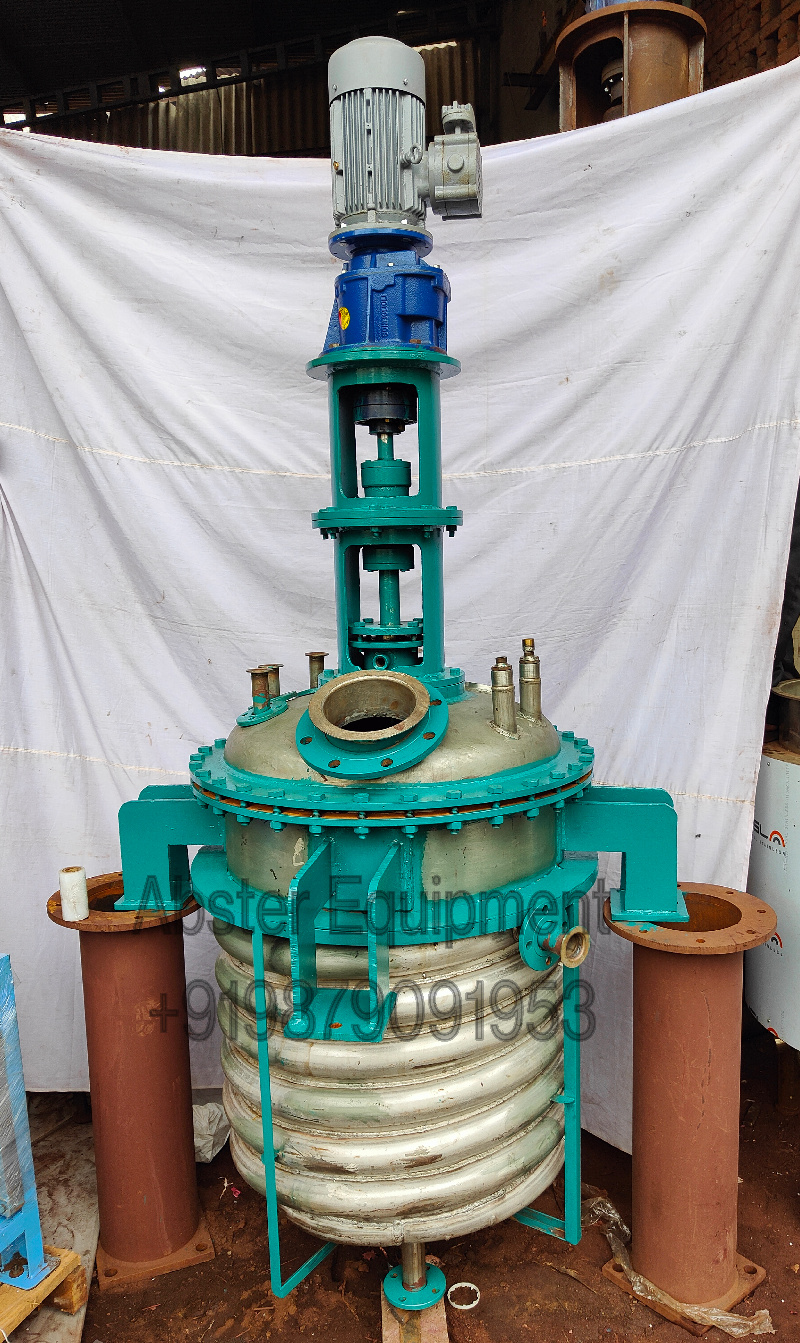
Acrylic Resin Plant Technical parameter
| Reaction Pot | Vertical Fractionating column | Horizontal Condenser | Separator | ||||
| Specification(L) | Size of Fractionating column(mm) | Stuff Volume (m3) |
Cooling Area (m2) |
Specification (mm) |
Condensation Area (m2) |
Specification (mm) |
Volume (L) |
| 300L | Φ159×560 | 0.01 | 0.22 | Φ219×1000 | 2.4 | Φ410×450 | 60 |
| 500L | Φ159×750 | 0.015 | 0.29 | Φ219×1500 | 3.6 | Φ410×450 | 60 |
| 1000L | Φ194×800 | 0.025 | 0.62 | Φ273×1500 | 5 | Φ410×450 | 60 |
| 1500L | Φ194×850 | 0.025 | 0.62 | Φ273×2000 | 6.5 | Φ410×450 | 60 |
| 2000L | Φ219×1000 | 0.035 | 1.0 | Φ325×2000 | 8 | Φ600×600 | 150 |
| 3000L | Φ273×1100 | 0.058 | 1.2 | Φ325×2000 | 10 | Φ600×600 | 150 |
| 5000L | Φ273×1200 | 0.065 | 1.5 | Φ377×2000 | 15 | Φ700×750 | 300 |
| 8000L | Φ325×1500 | 0.065 | 4 | Φ426×2000 | 20 | Φ700×750 | 300 |
| 10000L | Φ325×1800 | 0.07 | 5 | Φ426×3000 | 30 | Φ700×750 | 300 |
| 15000L | Φ377×1800 | 0.08 | 6 | Φ450×3000 | 40 | Φ800×750 | 500 |
| 20000L | Φ377×1800 | 0.08 | 6 | Φ450×3000 | 50 | Φ800×750 | 500 |
| 25000L | Φ377×2000 | 0.12 | 10 | Φ455×3000 | 60 | Φ800×750 | 500 |
| 30000L | Φ377×2000 | 0.12 | 10 | Φ475×3000 | 80 | Φ800×750 | 500 |